

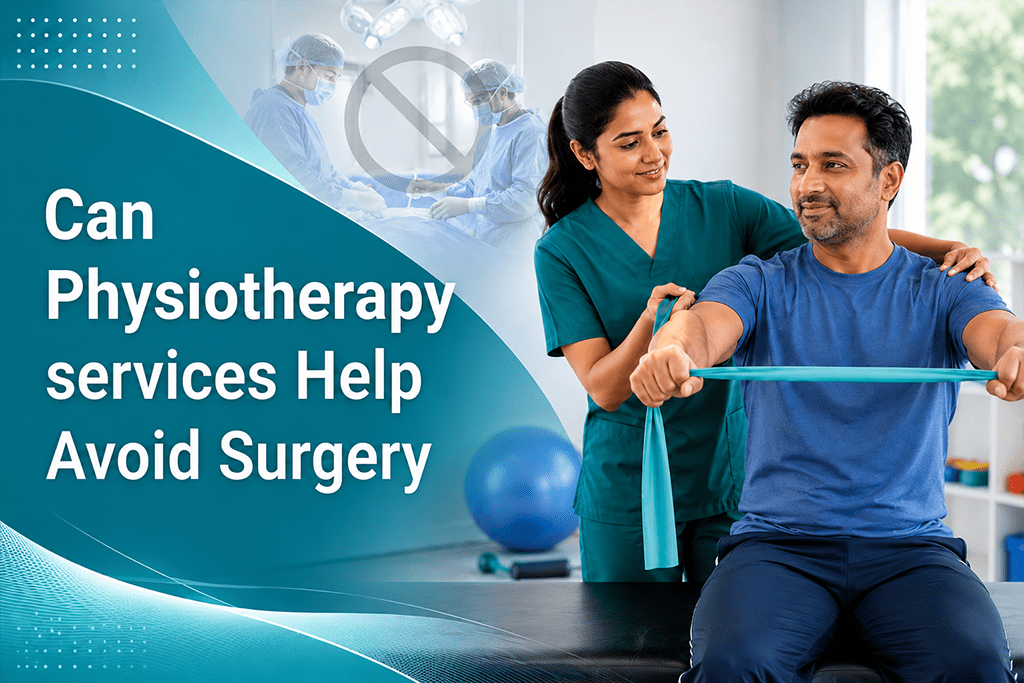
Can Physiotherapy Help Avoid Surgery?
Physiotherapy can help avoid surgery in many cases by reducing pain, improving strength, restoring mobility, and correcting movement patterns. Conditions such as back pain, frozen shoulder, arthritis, sports injuries, and sciatica often respond well to physiotherapy before surgical treatment is considered.
As healthcare continues to evolve, doctors are increasingly recommending conservative treatment approaches before considering surgery. Physiotherapy has become one of the most effective non-surgical treatment options for managing pain, restoring mobility, and improving quality of life.
This blog explains the science behind physiotherapy, real-world treatment outcomes, who benefits most, when surgery can be avoided, and how to make the right treatment decision.
How Physiotherapy help avoid Surgery
Yes, physiotherapy can help avoid surgery in many musculoskeletal conditions by reducing pain, improving joint function, strengthening supporting muscles, correcting movement patterns, and restoring mobility.
Conditions that often respond well include:
- Lower back pain
- Sciatica
- Frozen shoulder
- Knee osteoarthritis
- Sports injuries
- Neck pain
- Meniscus injuries
- Tendon disorders
- Postural problems
However, physiotherapy cannot replace surgery in every situation. Severe structural damage, complete ligament ruptures, advanced joint destruction, fractures, and certain neurological conditions may still require surgical treatment.
Why More Doctors Recommend Physiotherapy Before Surgery Today
Healthcare has shifted significantly over the past decade. Years ago, surgery was frequently recommended for many orthopedic conditions. Today, specialists understand that imaging findings do not always match symptoms.
For example, MRI scans often show disc bulges, cartilage wear, or age-related degeneration even in people who have no pain at all.
This means surgery should not be based on scans alone.
Modern treatment focuses on improving function, reducing symptoms, and helping patients return to daily activities safely. This is where physiotherapy plays an important role.
According to the World Health Organization, musculoskeletal disorders are among the leading causes of disability worldwide, affecting millions of people and creating a significant burden on healthcare systems.
Because of this growing challenge, non-surgical rehabilitation approaches are receiving increased attention globally.
As we age, cartilage (which cushions joints) wears down, leading to stiffness and pain, especially in the knees and hips.
How Physiotherapy Actually Helps Avoid Surgery
Many patients assume physiotherapy simply involves exercises.In reality, modern physiotherapy is a comprehensive rehabilitation science.A skilled physiotherapist evaluates:
- Movement patterns
- Joint mobility
- Muscle strength
- Posture
- Balance
- Flexibility
- Functional limitations
- Pain triggers
The goal is not just pain relief. The goal is restoring normal function.When muscles become stronger and joints move correctly, pressure on injured structures often decreases significantly.As symptoms improve, surgery may no longer be necessary.
The Science Behind Non-Surgical Recovery
Pain is often more complex than structural damage. Many conditions involve:
- Muscle weakness
- Joint stiffness
- Movement dysfunction
- Inflammation
- Poor posture
- Reduced flexibility
Physiotherapy targets each of these factors systematically. By correcting underlying dysfunction, patients often experience improvements that medication alone cannot provide.
This is one reason why orthopedic specialists frequently refer patients for Physical Rehabilitation Services before considering surgical intervention.
Conditions Where Physiotherapy Can Help Avoid Surgery
To determine the exact cause of joint pain, doctors may recommend the following tests:
Lower Back Pain
Lower back pain is one of the most common reasons people seek medical care. Many patients become concerned when MRI reports mention:
- Disc bulge
- Disc prolapse
- Degenerative disc disease
- Spinal narrowing
However, surgery is often unnecessary. Targeted rehabilitation, core strengthening, flexibility training, and movement correction can significantly improve symptoms.
Knee arthritis is a major cause of pain among older adults. Many patients assume knee replacement surgery is inevitable. In reality strengthening the muscles around the knee can reduce joint stress and improve mobility.
Physiotherapy often helps patients:
- Walk more comfortably
- Climb stairs more easily
- Improve balance
- Reduce pain during daily activities
In many cases, surgery can be delayed for years.
Frozen shoulders cause pain and severe restriction of movement. Without treatment, recovery may take years. A structured physiotherapy program can:
- Improve range of motion
- Reduce stiffness
- Restore shoulder function
- Minimize long-term disability
- Minimize long-term disability
Athletes frequently benefit from physiotherapy-based recovery. Common examples include:
- ACL rehabilitation
- Ankle sprains
- Hamstring injuries
- Rotator cuff injuries
- Tennis elbow
Many sports injuries recover successfully through rehabilitation without surgical intervention.
Sciatica
Sciatica often creates severe leg pain and numbness. Although symptoms can be alarming, many patients improve through:
- Nerve mobilization
- Core strengthening
- Postural correction
- Flexibility exercises
Surgery is generally reserved for severe neurological symptoms or progressive weakness.
Signs You Should Try Physiotherapy Before Surgery
Many patients ask whether they are good candidates for conservative treatment. You may benefit from physiotherapy first if:
- Pain is manageable
- Mobility is partially preserved
- Symptoms improve with movement
- No severe nerve damage exists
- No emergency medical condition is present
- Your doctor recommends conservative treatment
These factors often indicate a higher likelihood of successful non-surgical recovery.
When Surgery Is Still the Better Option
Physiotherapy is powerful, but it is not a cure for every condition.Surgery may be necessary when patients experience:
- Complete ligament rupture
- Severe fractures
- Spinal cord compression
- Loss of bowel or bladder control
- Advanced joint destruction
- Progressive neurological deficits
- Certain tumors or infections
A balanced treatment approach means recognizing when surgery is truly needed
Physiotherapy vs Surgery: Which Is Better?
There is no universal answer. The right choice depends on diagnosis, severity, symptoms, lifestyle, and long-term goals.
Factor | Physiotherapy | Surgery |
Invasiveness | Non-invasive | Invasive |
Recovery Time | Usually shorter | Often longer |
Hospital Admission | Not required | Usually required |
Risk of Complications | Low | Higher |
Initial Cost | Lower | Higher |
Rehabilitation Requirement | Yes | Yes |
Long-Term Outcomes | Often excellent for selected conditions | Necessary for structural repair |
The best treatment is not always the most aggressive treatment. The best treatment is the one that restores function with the lowest risk.
The Hidden Cost of Choosing Surgery Too Early
Many patients focus only on the procedure itself. However, surgery often involves:
- Hospital charges
- Surgeon fees
- Diagnostic investigations
- Post-operative medications
- Follow-up visits
- Rehabilitation expenses
- Time away from work
This is why many specialists recommend exhausting conservative treatment options first.
Cost of Physiotherapy in Mumbai
For many families, affordability matters. Approximate costs include:
Service | Cost Range |
Initial Assessment | ₹500–₹2,000 |
Physiotherapy Session | ₹500–₹3,000 |
Home Visit Physiotherapy | ₹800–₹4,000 |
Sports Rehabilitation | ₹1,000–₹4,500 |
Long-Term Therapy Package | Depends on treatment plan |
Compared to surgery, physiotherapy is often significantly more economical.
Why Physiotherapy Is Growing Rapidly in Mumbai
Demand for physiotherapy in Mumbai continues to increase because of:
- Sedentary work lifestyles
- Work-from-home posture issues
- Rising sports participation
- Aging population
- Increased awareness of non-surgical treatment
- Growing focus on preventive healthcare
Patients increasingly prefer evidence-based rehabilitation before committing to surgery.
Conclusion
For many conditions, physiotherapy provides a safe, effective, and scientifically supported pathway to recovery. While surgery remains essential for some patients, many others can reduce pain, restore mobility, and regain independence through structured rehabilitation programs.
If you are considering physiotherapy services in Mumbai, seeking an expert assessment early may help you recover faster, reduce healthcare costs, and potentially avoid unnecessary surgery altogether. At Manubhai Shah Medical & Research Centre, physiotherapy services focus on helping individuals regain strength, improve mobility, reduce pain, and return to their daily activities through structured, patient-centered rehabilitation programs.